
Steve Ells, Chipotle founder: ‘The public doesn’t like to see technology nearby when they’re trying to eat’
The restaurant executive tried having a robot make vegan food at a New York location, and it was a failure — now he’s back to human employees
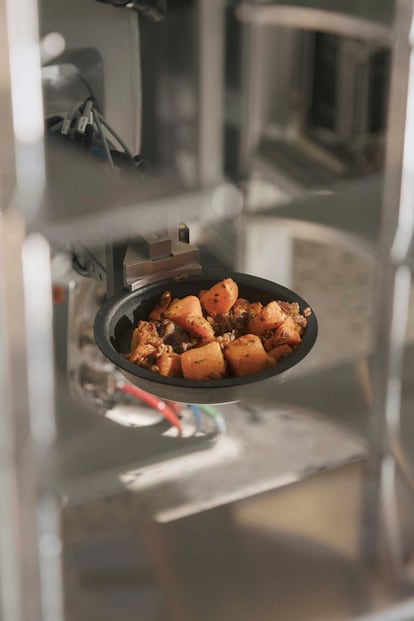
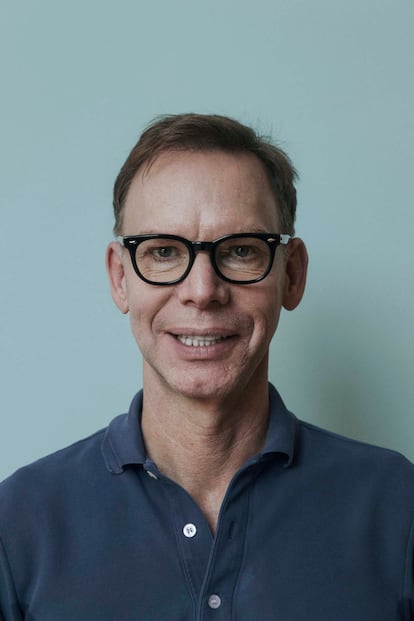
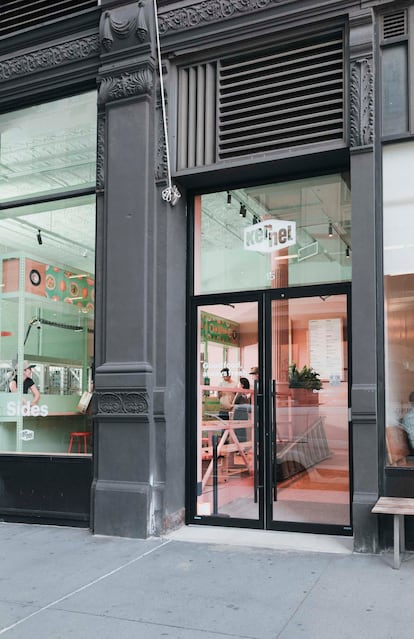
Although before, the first time many middle-class individuals encountered a robot was in their kitchen (via their Thermomix, perhaps) it seems that in the era of AI, Alexa, self-driving cars and tech feudalism, the last thing that New Yorkers want when they dine outside the home is to see a big iron arm frying up their lunch. Such was the lesson learned by multi-millionaire Steve Ells, 59, who revolutionized the restaurant business more than 30 years ago when he opened the first location of Mexican fast food brand Chipotle. A few months ago, he closed the doors on his latest endeavor Kernel due to lack of clientele.
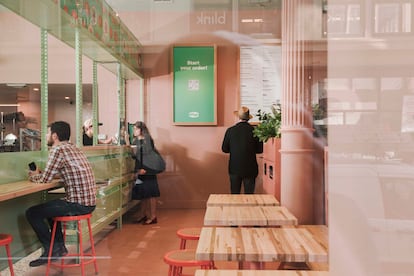
“Clearly, we’ve realized that the public didn’t like to see technology so close by when they’re trying to eat,” explains Ells in a third round of conversation with EL PAÍS. The first interview was meant as a presentation of his new idea, the second, to explain changes they were going to make to save it, and the third, to present a completely new project: an establishment that after the ambitious and failed previous proposal, sells traditional sandwiches under the name Counter Service. A location just opened in Chelsea and another on Park Avenue, and it seems they are validating Ells after what he refuses to call a failure, opting instead for commenting that Kernel “didn’t grow as fast as we would have liked.”
Chipotle changed fast food forever with its format in which speed was not at odds with healthy, quality product. Kernel looked to once again shake up gastronomic offering with an ambitious proposal.
Ells came out of early retirement after having caught sustainability fever listening to Bill Gates speak about environmental damage caused by the food industry, especially meat production. He was also inspired to create a business that would reverse the high personnel turnover rate that characterizes the service industry.
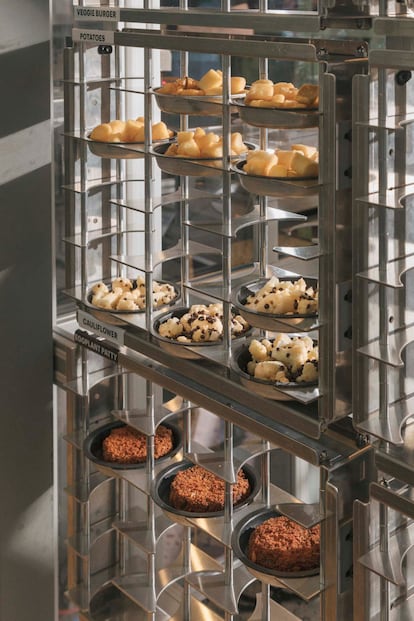
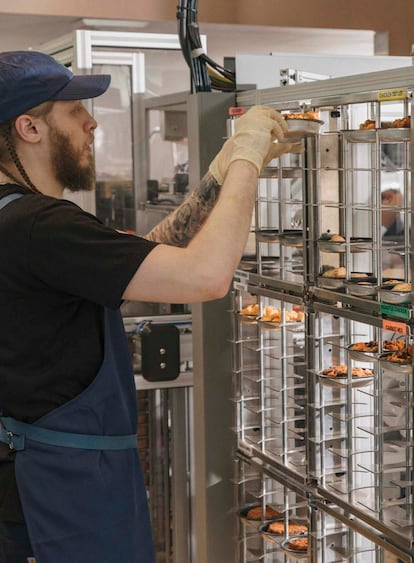
At the intersection of these two missions, he found a combination whose oxymoron escaped his notice: a vegan menu with less environmental impact, prepared by a visible robot in a sterile, Silicon Valley-style establishment.
“What if I opened up a concept that was plant-based, that was really delicious, and it could be people’s everyday food?,” proposed Ells. “And then it got to be a chain like Chipotle, and everybody copied it like Chipotle?” This was to be his contribution towards saving the planet. “And we put the technology at the service of the worker, who doesn’t have to do the dirtiest part of the job, and can also have a higher salary because of it?” This, his bid to reduce turnover. And none of it would come at the expense of the consumer. “People are selfish. They want delicious food, great value, convenience,” he says.
To design the menu, he hired Andrew Black, former chef at the three-Michelin-star restaurant Eleven Madison Park, and named star chef Neil Stez of Quince, the highly acclaimed San Francisco restaurant, culinary manager.
Another one of Ells’ audacious moves was that everything would be cooked in a large central kitchen, with robots putting on the last touches in locations open to the public, positioned in strategic areas like Madison Square Park and SoHo. To investors, it sounded a guaranteed smash hit: they raised $36 million for the project, though Ells did contribute $10 million from his own pocket.
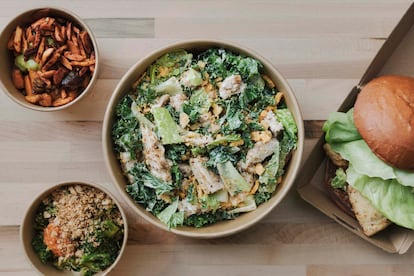
Higher-ups had a lot of faith in the mission, but it turned out customers didn’t share their sentiment. “There’s no public for vegan food on a large scale,” Ells wound up concluding so he ended up adding chicken and dairy to the menu, though he still wanted to avoid using beef, the biggest culprit among environmentally damaging meats.
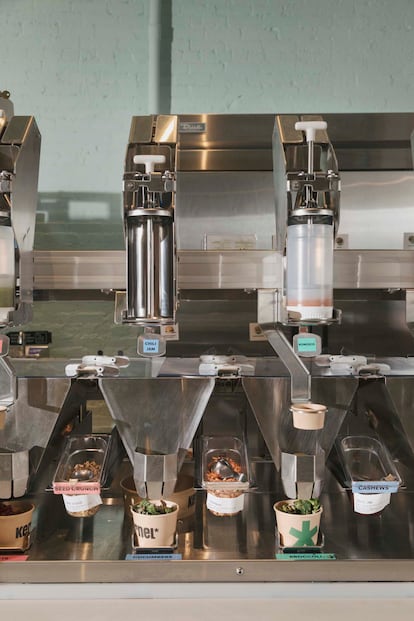
But at this point, Kernel was already cursed. Even the technology itself seemed to have turned against Ells. When we interviewed him in October 2024 at the SoHo location, the air conditioner wasn’t working. A New York Times article that came out a few days later mentioned that a robot had stalled during a demonstration.
After that first conversation, Ells decided to put a pause on the chain’s operations for the second time in a year to rethink strategy. “It’s especially fun when people like you come in,” he told the author of this article, “who have these preconceived notions that I’m taking their jobs away because I have a robot, or that for some reason, because there is automation, the food can’t be good. The food is actually better. The employee experience is better. Pay is better because we’re using technology to our advantage.”
At the end of February this year, Ells announced that Kernel would close and in its place would open a new business. At the moment, there’s a pop-up where the old central kitchen used to be. The same star chefs continue to work there.
The new business’s identity has nothing to do with Kernel, and radical change is notable not only in the model, but values of the place: once again, there’s a beehive of workers at the cash register, and the menu is written in calligraphy, everything has a vintage, nearly handmade touch. The first plate on the menu is roast beef.
Ells has no problem acknowledging that despite his best intentions for the planet, he’s a businessman first and foremost. He smiled upon seeing the line at Counter Service. “Technology continues to be a very important part,” he says, “it’s simply not as visible now. And we’re not ruling out a return to robotics in the future. But through it all, we continue to advocate for better salaries for employees in this industry,” he insists.
Sign up for our weekly newsletter to get more English-language news coverage from EL PAÍS USA Edition









































