
Venezuelan Supreme Court admits Maduro’s election challenges
Justices stop four assembly members from taking their seats while it examines cases Opposition says all of its deputies will be on hand when it takes control of house next week
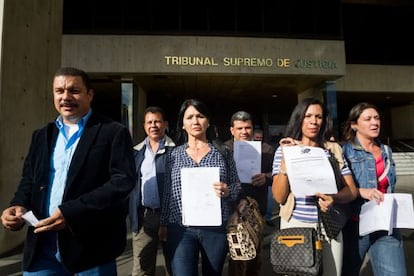
The Venezuelan Supreme Court late Wednesday agreed to hear seven election challenges filed by the government of Nicolás Maduro against the opposition stemming from the December 6 legislative race in which the ruling United Socialist Party of Venezuela (PSUV) lost its majority in the National Assembly.
But the top court’s decision for now only prevents the four deputies from Amazonas state – three from the opposition and one from a PSUV ally party – from taking their seats while justices examine all the cases.
The opposition has called the Supreme Court’s move “a judicial coup d’etat”
New National Assembly members are scheduled to be sworn in next Tuesday.
Tension and uncertainty is growing in Venezuela as the Maduro government and his allies continue to maneuver in the middle of the holiday season to block or at least delay the opposition from taking control of the assembly next week.
The opposition will control two-thirds of the 167-member legislative body with 112 seats, which will give it enough parliamentary power to reform the Constitution and carry out votes of censure against the vice president and government ministers.
Government candidates who lost in the races filed election challenges in six election districts with the Supreme Court, alleging voting irregularities. The government alleged that votes were bought by the opposition in Amazonas, a poor state with a small population in the south of the country.
The Democratic Unity Roundtable (MUD), the alliance that groups the opposition parties, called the Supreme Court’s move “a judicial coup d’etat” but said that all of its 112 deputies would be on hand next Tuesday for their swearing in.
Meanwhile during a public event in Aragua state, Maduro made no reference to the court’s decision but did not hide his distaste for the make-up of the new assembly.
“It leaves a bad taste in your mouth,” he said.
English version by Martin Delfín.









































