
Husband of woman infected with Ebola closely monitored in hospital
Health chief admits nurse should have been treated when she first presented symptoms
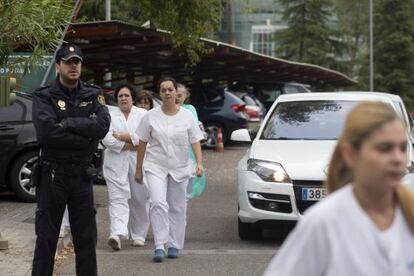
The husband of the nursing assistant who was diagnosed with the Ebola virus on Monday is currently being monitored in hospital, according to the general director of Public Health, Mercedes Vinuesa. The man, about whom few details have been made known, is of greatest concern for the authorities, given that he had most contact with the woman.
Vinuesa stated in an appearance in Spain’s Congress on Tuesday that the man “has been admitted so that he can undergo quarantine with greater monitoring.”
As well as the husband and wife, there are two other people suspected to have caught the virus: an engineer who traveled to Spain from Nigeria, and a nurse from the Intensive Care Unit at La Paz hospital.
The coordinator of the Health Ministry’s emergency response center, Fernando Simón, has said that although the nurse’s assistant is not presenting serious symptoms, it would have been better to have admitted her to hospital when she first fell ill on September 30, rather than on October 6, by which point she was running a high fever. When she first reported to the health authorities that she felt ill, she did not meet the criteria to be considered as a suspected case of Ebola. Simón added, however, that given that the woman had been in proximity with one of the two Spanish missionaries with Ebola who were brought back to Spain, a different approach could have been taken.
The health chief confirmed that the patient has been able to establish a list of people with whom she has been in contact. “But the objective is not just her, but rather all of the people around her and those who treated the patients,” he explained. “There is a chance that one of her contacts could be infected. That does not present a risk for the population, but we have to guarantee that this same situation is not repeated. This cannot happen again,” he concluded.









































