
Spain defends use of razor wire on Morocco border fence
Interior minister says he is unaware of any EU law against measure “Belgian police use it on occasions and other European countries as well,” Fernández Díaz argues
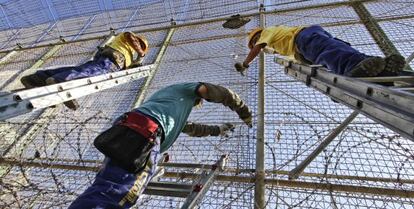
Following criticism from the European Commission, Interior Minister Jorge Fernández Díaz on Thursday defended the Spanish government’s decision to install razor wire on the border fence between Morocco and its North African enclave of Melilla.
Speaking in Brussels, Fernández Díaz said that if the use of the deterrent breached European Union rules, the government would consider removing it, but added that so far there have been no indications that this is the case. He argued that other EU countries use similar methods to dissuade would-be illegal immigrants.
Fernández Díaz said he had held a “long and cordial” talk on the issue on Wednesday with the EU commissioner for home affairs, Cecilia Malmström.
Referring to a previous occasion when Melilla had razor wire installed, Malmström said in a press conferecnce: “From what I read [the razor wire] did not stop people from coming in; they just arrived with more injuries. If that was true then, it must be true now."

“She had the idea, and she expressed this to me, that the concertina wire was not an effective deterrent and that it caused serious injuries,” Díaz Fernández acknowledged. He said he told her that the Spanish government’s position was that it was a “passive, non-aggressive and dissuasive method” to stem a flood of illegal immigration.
“We are not aware of any EU legislation that prohibits this,” Díaz Fernández added. “Right here in Brussels, the Belgian police use it on occasions and other European countries do as well. We know that EU member countries have installed it on their borders. But we are ready, as always, to reconsider our decision, if it were the case [that it was illegal].”









































