
Galerie Kugel, the gallery of out-of-reach treasures: ‘Not every extraordinary object ends up in a museum’
From their magnificent Paris ‘hôtel’, the Kugel family preserves, studies and sells unique antiques to collectors and institutions around the world. We toured their rooms

At the latest edition of TEFAF, the world’s leading antiques fair, visitors lined up to study, with the aid of a magnifying glass, one of those extraordinary objects that form a category of their own. It is the work shown in the image below this paragraph. It is a view of the city of Madrid made in 1740 by an artist, Nicolas Engelbert Cetto, who lived in a Bavarian town and never visited Madrid. The remarkable thing is that it is made of wax: for months Cetto devoted himself to creating this delirious miniature composition which, when examined with a magnifying lens, even reveals inscriptions identifying, as though it were a tourist map, the main buildings of the city associated with the king of Naples, the future Charles III, who received this work, together with three others, as a wedding gift on his marriage to Maria Amalia of Saxony.
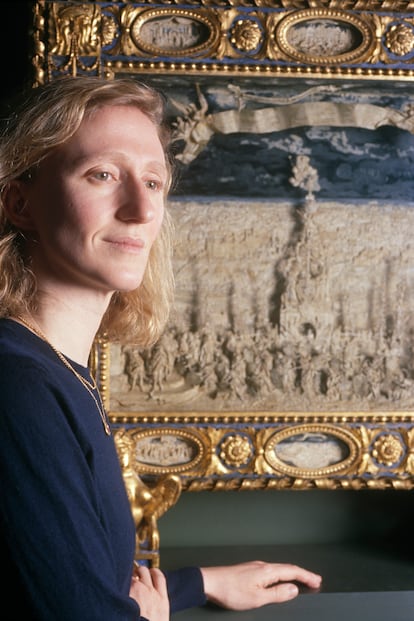
It is more than a curiosity. “When we acquired it we spent a year researching all the iconographic references, the history of the piece,” says Laura Kugel, who is pictured in front of the work. “It is a museum-quality piece, and I don’t like to use that expression lightly, because not every extraordinary or well-made object necessarily ends up in a museum, but this one employs a unique technique mastered by only a father and his son: the father made small hunting or religious scenes, and the son learned the technique but transformed it into something far more delirious, like this. He died at 33, with no apprentices or descendants. The technique died with him. It has something of a child’s toy and something of madness. Its price, of course, reflects that singular character. But beyond who buys it, it is a work that will interest anyone.”
The relief, which of course is for sale, is the only one from the series that until now remained in private hands. Two decades ago the Royal Academy of Fine Arts of San Fernando in Madrid acquired the other three Cetto reliefs. But this one has not returned to the market until now. It could end up in Madrid with the others, “but it could also finish up at the other end of the world,” Kugel clarifies.
For five generations, her family has worked in antiques, beginning with clock collecting in Russia and, since 1924, in Paris. Laura’s grandfather began selling antique goldsmithing in a shop in central Paris but soon realized furniture and art offered greater opportunities. He died at the peak of his career in 1985, and his sons, Alexis and Nicolas, who were barely 20, had to learn quickly. “My grandfather died very young,” Laura Kugel notes. “My father and my uncle couldn’t learn from him as a teacher, but they did have his objects. And by looking at them they understood his philosophy, his taste. At first, when they encountered an object they tried to imagine what my grandfather would have thought. Would he have bought it? Would he have liked it? That is how they managed to carry on that vision.”
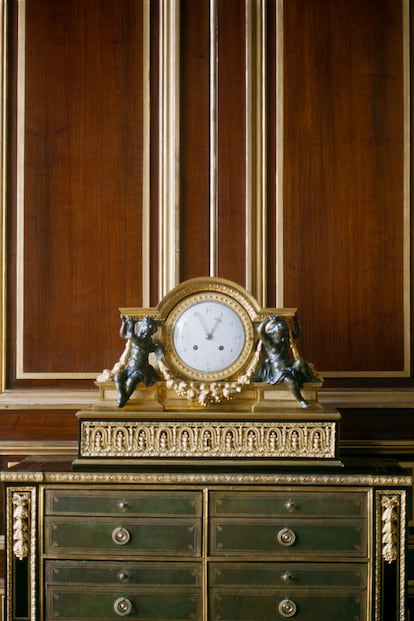
The vision she refers to is what has made Kugel a category of its own in contemporary dealing: a mix of works of art, cabinet-of-curiosities pieces and, above all, examples of those artisanal techniques that peaked before the Industrial Revolution. That is why her work focuses, with few exceptions, on pieces made before 1820, when Europe began to fill with factories. Her catalogue includes both monumental works —for example, a table commissioned by Cardinal Fesch, Napoleon Bonaparte’s uncle, made from a fragment of Roman porphyry column— and fascinating rarities in enamel, amber or Trapani coral.
Discovering the object is the hardest part,” she says. “We spend a long time studying it. If we have to wait ten years to show it, we can afford that luxury. So it doesn’t matter if it doesn’t sell immediately. Each object patiently waits for its next owner.” In this field, five-, six- or seven-figure prices are common.
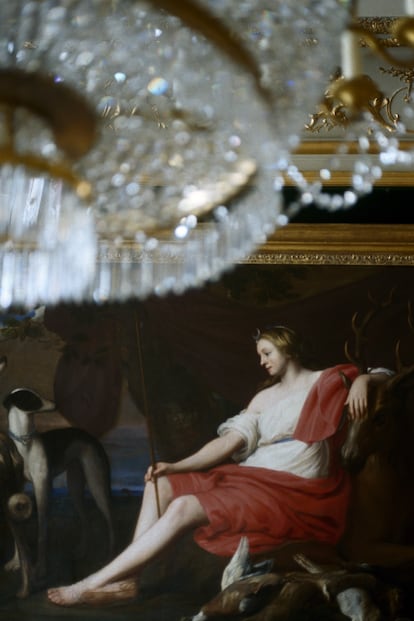
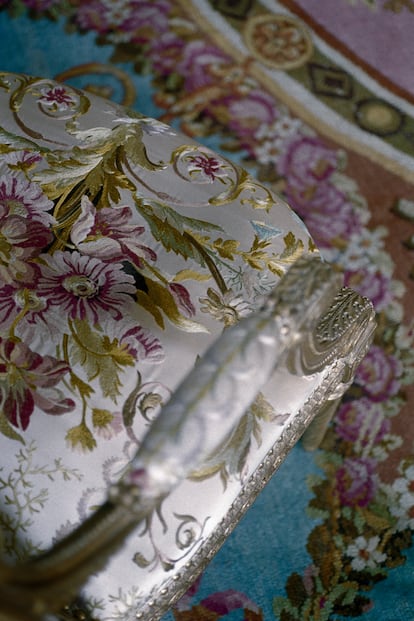
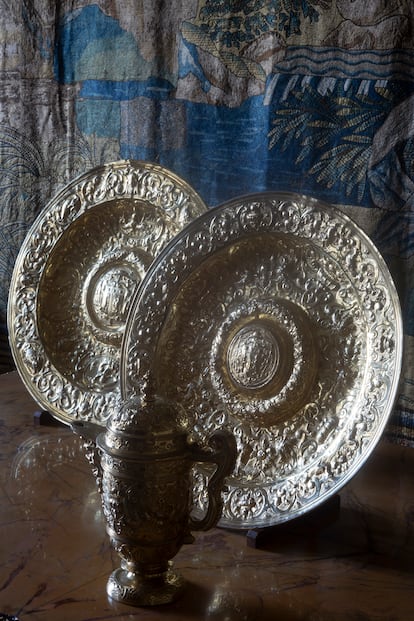
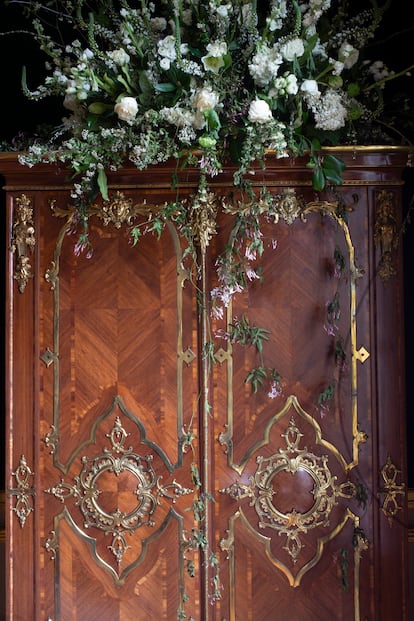
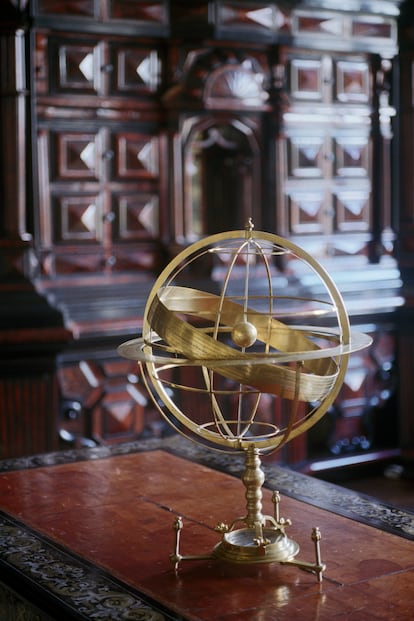
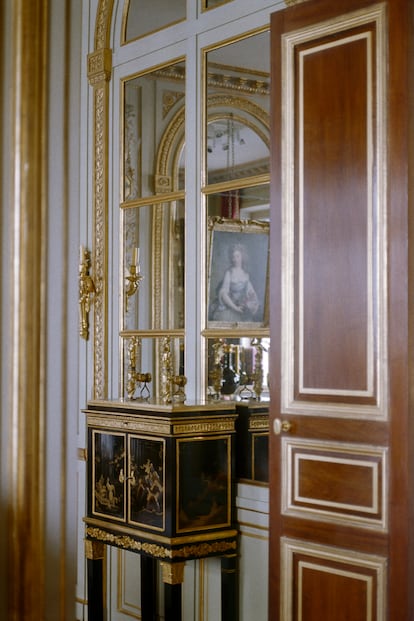
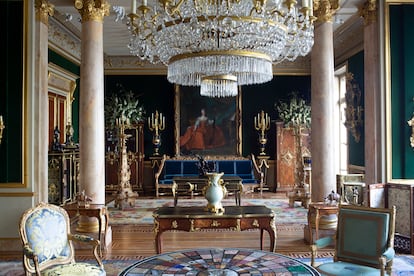
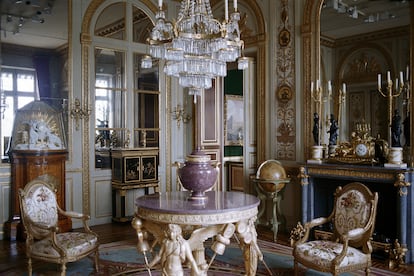
Since 2014 the gallery has occupied a town house built in 1840 for the director of the Monnaie that for decades housed the Spanish embassy. The only interior that preserves intact the decoration from the golden age of the hôtels particuliers of the Second Empire is the gallery’s main salon, where baroque consoles, rococo chairs, monumental carpets, pietre dure tables —the stone marquetry craft that made Medici Florence famous— classical sculptures and silver trays coexist in joyful promiscuity and happy anachronism, recalling that, at the start, the Kugel family’s shop was a place wealthy customers visited at Christmas to buy antique goldsmithing.
But that was before the antiques market exploded: as Kugel, who joined the family business a decade ago, recalls, from the 1970s to the 1990s dealing experienced years of euphoria. Prices were sky-high and collectors competed to amass extraordinary objects. “There was a general enthusiasm,” Kugel says. “My father recounts that once Yves Saint Laurent came to him with a picture showing Marie-Laure de Noailles with a board full of goldsmithing, and said: ‘I want the same thing, the same table, the same goblets, everything.’ After two or three years, when they managed to assemble the set, he backed out.”
Times have changed. The market has contracted. There are fewer dealers, and they are increasingly polarized around either the more affordable items or the most valuable ones. Kugel plays in the latter category. Every two years they organize exhibitions dedicated to techniques such as enamel or amber, bringing together carefully researched acquisitions. Their catalogues, more than commercial documents, are museum monographs. In May she opened an exhibition at David Zwirner in New York to demonstrate that a 1650 alabaster vase can sit alongside a work by Gerhard Richter. “To work in antiques, and to collect, you have to enjoy it. You can’t take it as a joke, but you must find pleasure and wonder in pieces that lift you out of the everyday. We are talking about objects with significant prices that deserve study and rigor. But you should approach them with a certain lightness. After all, devoting yourself to this is an enormous privilege.”
Sign up for our weekly newsletter to get more English-language news coverage from EL PAÍS USA EditionSign up for our weekly newsletter to get more English-language coverage









































