
The limbo of the Diablos, the firefighters from the US-Mexico border
A group of locals recruited decades ago from the ranching communities of the Coahuila-Texas desert to serve as Big Bend National Park’s firefighting brigade now faces an uncertain future amid the budget cuts and immigration restrictions of the Trump administration

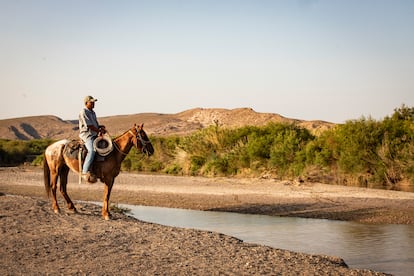
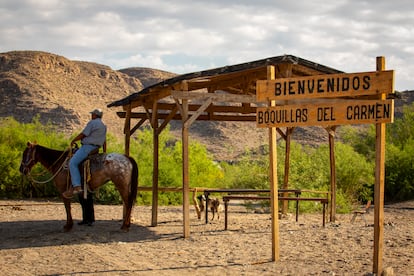
Adrián Valdez rides his horse slowly into a clearing on the bank of the Rio Grande — or the Río Bravo, depending on which side of it you’re on. At 50, with a gray mustache and cowboy boots with spurs that mark the pace of his brown-and-white horse, he doesn’t seem to know what hurry is. Time bows to him and his animal. But that’s only because this Tuesday he has no job to be at. For virtually his entire adult life though, it has been two that have kept him and his family afloat.
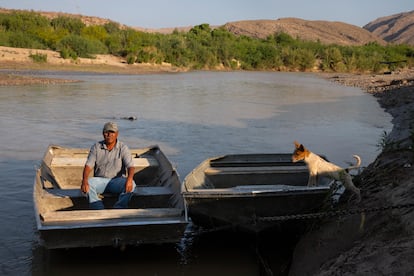
Friday through Monday, this stocky, sun-weathered man ferries tourists across the river in small boats — from Big Bend National Park in Texas to his small hometown of Boquillas del Carmen, on the Coahuila side. He is also crew chief of the Diablos, the Mexican forest firefighters of the U.S. national park, whose jobs have been frozen since early 2026 by the budget cuts and immigration policies of the Trump administration.
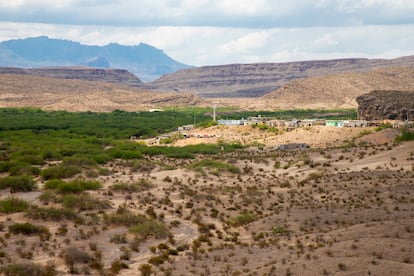
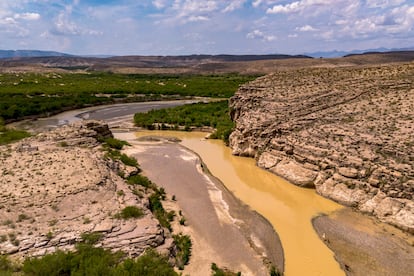
Valdez became a firefighter in 1997, when the Diablos expanded for the first time since their founding in 1990. “A park ranger used to come by, tell stories, bring the mail. And talking with people about how fires had started breaking out [in 1989, there were about 40 in the park] he said they could try to put together a Mexican brigade with local people. And it happened. At first, around 45 firefighters came on. Then some got old, and others didn’t pass the tests. And that’s when we joined, in ’97,” Valdez recalls, without dismounting, his eyes on the current that — in the middle of an endless drought — runs neither grand nor fierce through this stretch. Even so, the water marks one of the most heavily monitored borders in the world, though here that territorial line dissolves into a single ecosystem and would go unnoticed if not for a pair of cameras mounted on poles visible through the desert scrub on the U.S. side.


Over nearly 30 years as firefighters, Valdez and the Diablos have quietly served as a bridge. Today, just over 20 of them remain — men who worked and put themselves at risk to preserve the arid, rugged U.S. wilderness, a mirror of the landscape where they were born and raised. On the Mexican side, that landscape encompasses the Cañón de Santa Elena National Park, the Ocampo Flora and Fauna Protection Area, and the Maderas del Carmen Protected Natural Area. In return, they received an annual salary of around $6,000 — sometimes more, sometimes less, depending on how bad the fire season was — an income impossible to come by any other way in their remote villages of adobe houses with dusty, unnamed streets. That money allowed them to raise families and keep them together without having to leave the land that has been the home of their surnames for generations.
With years of experience and constant training, the Diablos began crossing into the United States to fight fires across the country as a specialized support crew, earning a reputation as fierce, tireless workers. Together like a family — many of the Diablos are cousins or brothers-in-law — they battled blazes in places as far away as California or Montana, near the Canadian border. They even helped out in Florida and Puerto Rico in the wake of devastating hurricanes.
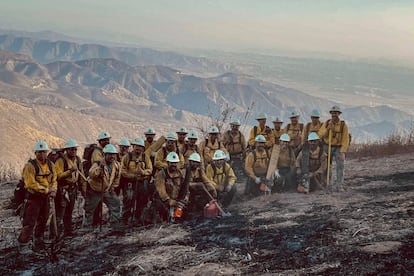
In that story, apart from the park ranger who had the original idea, the key figure was John Morlock, who for most of his career served as Big Bend’s fire management officer. Morlock, a Texan with a passion for the outdoors, is now retired and 70 years old, and he speaks of the Diablos with pride. It was he who, starting in 1997, trained them despite his basic Spanish and managed to get them authorized to fight fires outside the national park in 1998. He also ensured that, after the closure of the Boquillas border crossing following the September 11 terrorist attacks, the firefighters were granted a special exemption to enter U.S. territory during emergencies.
The sweeping new immigration policy that emerged in the wake of the jihadist attacks — which turned Boquillas del Carmen into a ghost town until the crossing reopened in 2014 — looked like a death sentence for the Diablos. But Morlock pushed back: there were hardly any communities on the U.S. side from which to recruit new firefighters, the Diablos were already trained and excellent workers, and Big Bend couldn’t afford to be without a rapid-response firefighting crew, he argued. “We negotiated with Customs and Border Protection, and they agreed it was a mutually beneficial situation. And not only did they grant the exception so they could cross — they also waived the fees for the annual renewal of their work and immigration permits,” he explains over a video call from his home in Alpine, a small town just north of the park.
Today, 25 years later, Donald Trump’s Republican administration has once again switched off the lights on the Diablos’ future. On one hand, budget cuts to federal agencies — including the national parks — have forced Big Bend to scale its fire program down to a bare minimum, effectively sidelining the Diablos. On the other, the immigration restrictions imposed by the administration have meant the cancellation of the special exemptions and authorizations that allowed the firefighters to cross the border for work. The result: the Diablos are in limbo, with no clarity about what lies ahead, and forced to look for other work — not knowing whether the situation will be temporary or permanent.
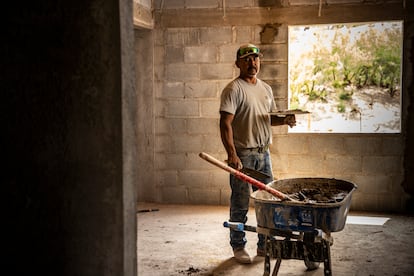
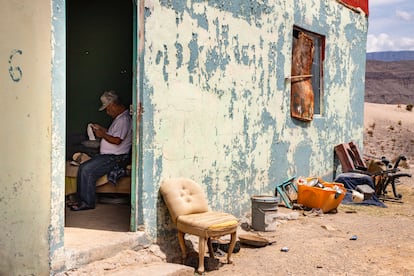
The wait has pushed Eleasar Martínez fully back into his work as a bricklayer — his trade when he’s not a firefighter. But Martínez, 48, broad-shouldered and a man of few words, is not just any firefighter: he’s a sawyer. Out at the front line, he pushes into the densest vegetation ahead of everyone else, chainsaw on his back, cutting the break that will stop the fire’s advance by leaving it nothing to grab onto. “When we go out, we’re like brothers, because we’re all facing the same danger,” he says, downplaying his own role as he takes a break from plastering the walls of one of the few new houses in this quiet village dotted with weathered buildings.
In his case, becoming a Diablo was a family inheritance. His father was part of the original group, but by 1997, he could no longer pass the physical tests, and so Martínez took his place. It’s a tradition his own children — and those of the other Diablos — would be willing to carry on, if the door that is now locked shut by budget cuts and immigration restrictions were to open again. They know that despite the danger of fire and the grueling nature of the work, it comes with a salary paid in dollars.
Though money isn’t everything. Some are Diablos out of pure passion. Among the group of men who have faced the flames for years, one figure stands out: Marisol Gama, an archaeologist originally from Michoacán, now 43, who ended up breaking the brigade’s glass ceiling. Gama first came to the region to work on a binational project documenting historical sites and cave paintings, living in a white house on the American side visible from Boquillas. Her entry into the team was almost accidental: her love of photography led her to follow the firefighters during a blaze to get pictures, until the program chief spotted her and, after reprimanding her for the risk she was taking, told her that kind of courage shouldn’t go to waste. She completed the grueling training and physical tests to become, in 2018, the first official female Diablo.
Before leaving Boquillas to start a family in Arizona — though she can still join on specific missions, because this Diabla will never stop being a Diabla — she would mark sacred sites and cave paintings during fires and controlled burns to prevent machinery or the sawyers’ firebreaks from destroying the desert’s ancient history. Today, from a distance, her fellow crew members speak of her with deep affection, and not one of them objects to more women following in her footsteps.
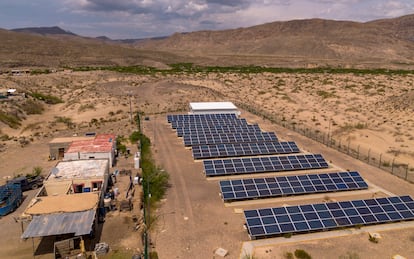
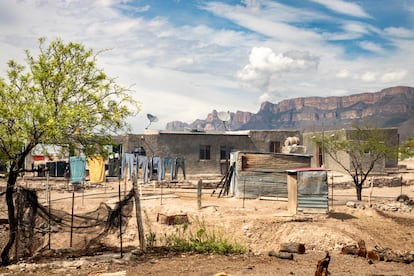
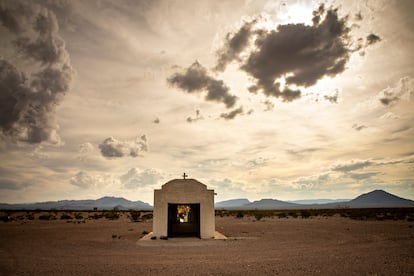
But that brigade renewed by sons and daughters is, for now, only a dream. The reality for many — especially those from the ranching communities surrounding Boquillas del Carmen, all but forgotten more than 600 kilometers (372 miles) north of the state capital Saltillo, yet watched over at night by a sea of stars which shine unobstructed in the sky of a desert frozen in time — has been a return to the area’s most traditional means of survival: candelilla.
That’s the fate that has fallen to Juan Romero, another Diablo from the class of 1997, who has gone back to Las Norias — a settlement so small at the foot of El Carmen’s towering cliffs that it doesn’t even appear on maps. His days now begin before dawn, when he heads out with his adult sons into a sea of scrub to gather a wild plant that looks like the head of a green mop, which is then processed in boiling water with sulfuric acid to extract a wax sold to the cosmetics industry.
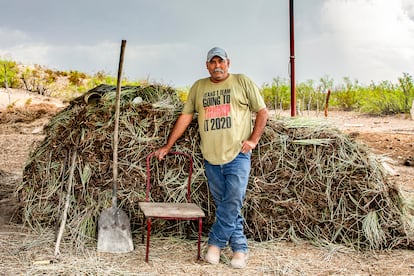
The risk of burns from the corrosive acid — something he knows well as a firefighter — doesn’t faze him. But the economic blow is devastating. Romero, wearing a worn t-shirt printed with letters in support of Donald Trump’s 2020 campaign and oblivious to the irony of it, does the math by the open fire that fuels the candelilla’s artisanal processing: his income is now “less than half.” As Diablos, the firefighters could comfortably earn more than the Mexican national average — and far more than the rural average, where anything beyond bare subsistence is a privilege.
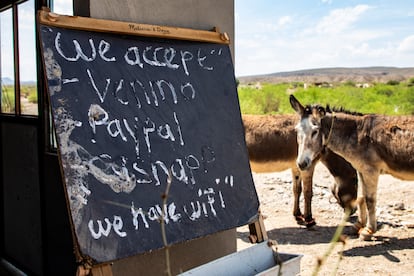
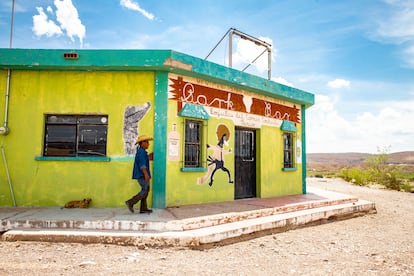
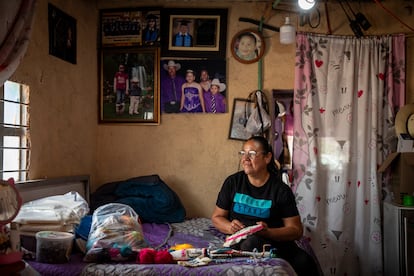
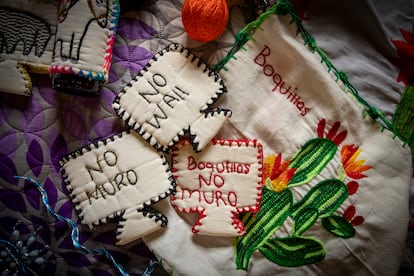
Lucía Orozco, Adrián Valdez’s wife, also grew up among the scrubland gathering candelilla, but now she gets by on tourism. In her small three-room house — a kitchen and two bedrooms that double as a living room — she embroiders and makes the crafts she sells to the tourists who cross the river in her husband’s boat on weekends. On a good day, she says while making homemade flour tortillas for her husband, her son, and young daughter, and whoever walks through the door, you can pull in around $50. But good days aren’t the norm.
On top of that, this income, like the Diablos, is also under threat from Donald Trump’s policies. The fear that a physical wall will be built, the border sealed, and Boquillas turned into a ghost town once more, is very much alive here. “We’ve already lived through it twice,” says Orozco, “in 2001 and during the pandemic. But with the wall...” — and she finishes the thought with a look: it’ll be back to the candelilla.
In recent months, on the U.S. side, the question of a border wall in Big Bend has sparked protests and petitions to halt its construction. Undocumented migrants rarely pass through this area — the terrain is too remote, and the river winds through towering canyons with sheer walls impossible to scale. In 2025, just 1.3% of all border detentions were recorded in the Big Bend sector. The park is also covered by cameras and Border Patrol agents who monitor its roads.
A citizen resistance movement, unusually bipartisan, has managed for now to keep the metal wall that has become a fixture of the border in other areas away from Big Bend. Here the wall will be “smart” — made up of sensors and additional cameras, according to a map published on the CBP’s website. No official announcement has been made, but nerves among locals remain palpable.
If it goes ahead, this barrier-free model would be a win for wildlife advocates in the region, who argue that animals such as black bears, white-tailed deer, and mountain lions — among several dozen endemic species — don’t recognize the river as a border and cross freely between sides. A wall along the riverbank would, they warn, be a death sentence for the area’s biodiversity, as has already been seen in places like Arizona, where barriers have become deadly traps, and hundreds of animals have drowned in floodwaters.
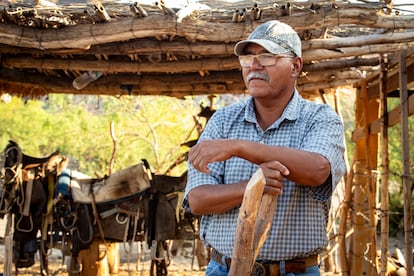
As the fate of Boquillas del Carmen and the Diablos is decided in offices in Washington, among the firefighters and their families, there is nothing but goodwill toward the United States. “They’ve always helped us. They’ve always been more present than Mexico,” says Valdez. “The problem isn’t with the neighbors in the park — the problem is with the higher-up authorities who changed everything. But they tell us they’re working to fix it. Almost there,” he goes on, with an unshakeable confidence in the future, forged by desert life, which has taught him to smile even when his pockets are empty.
John Morlock, barely 150 kilometers (93 miles) to the north, doesn’t share his old colleague’s optimism. For him, the situation is an indefinite “time out” that threatens to extinguish the Diablos for good. “They’re getting older... the mountains are getting steeper than ever, and the trails are longer.” Perhaps only a tragedy will act as the catalyst for renewal. “When a senator’s cabin burns down, or when a community loses hundreds of structures to a deadly wildfire, maybe then they’ll listen when we point out that, if we’d had more help, it could have been prevented.”