
US military vs. beards: Why banning facial hair may be discriminatory
Pseudofolliculitis, a common skin condition that affects Black men more, is aggravated by constant shaving. But Pete Hegseth’s ‘No more beardos’ policy in the US military ignores this

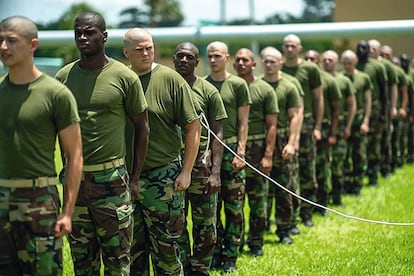
In the age of streaming, television series no longer just entertain: they dictate conversations, shape esthetics, and sometimes even foreshadow headlines. Take Boots (Netflix, 2025), for example. The series follows two young men training at a U.S. Marine Corps recruit center in the 1990s. But what might seem like a nostalgic tale of discipline and military brotherhood becomes — with almost imperceptible detail — an X-ray of current dilemmas surrounding identity, body, and power. In the first episode, an African American cadet faces a skin problem while adhering to regulations: he suffers from pseudofolliculitis, a skin irritation caused by shaving. His superior, also a Black man, offers him talcum powder in a gesture of camaraderie.
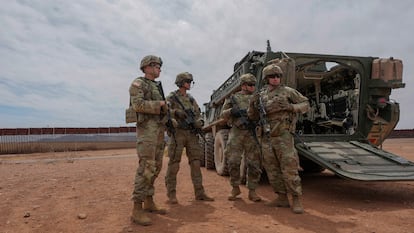
The series premiered a few days after U.S. Defense Secretary Pete Hegseth banned troops from sporting beards. “The era of unacceptable appearance is over, no more beardos,” he declared in late September in a speech to dozens of high-ranking officers at a military base in Virginia. There, he gave a lengthy talk in which he asserted that the “laxity” that had led to “fat generals and admirals in the halls of the Pentagon” was over. Hegseth promised the return of the “warrior esthetic,” by which he meant visible discipline: a fit body, a clean-shaven face, and a presence that projects, according to the stereotype, strength and readiness for combat. “We don’t have a military full of Nordic pagans,” he added.
These rules go far beyond military discipline. Those with medical exemptions have one year to “resolve their condition” or they will be discharged. Pseudofolliculitis is a chronic condition caused by frequent shaving. It occurs when hair, especially curly hair, grows inward, causing inflammation and scarring if it worsens: according to the Spanish Academy of Dermatology and Venereology, it can disfigure the skin of the face. It is a very common skin condition in men, but it does not affect everyone equally: according to the American College of Osteopathic Medicine and Dermatology, up to 60% of Black men suffer from it, compared to 20% of white men.
So, if Hegseth mandates daily shaving without exception, the measure will disproportionately affect African American soldiers. Studies indicate that between 45% and 83% of Black men have suffered from pseudofolliculitis in environments with close-shave policies. In numbers, this could mean tens of thousands of soldiers in a military where more than 224,000 active-duty troops (17% of the total) are African American, according to 2023 Pentagon data.
Shaving rules in the U.S. Armed Forces have changed over the years. Until the 1960s, beards were prohibited; however, with the Vietnam War (1955-1975), the first — and numerous — medical exceptions appeared due to the increase in enlisted African American soldiers. Mandatory shaving returned in the 1980s with limited exceptions, and by the end of the 20th century, the allowance was broadened because beards helped soldiers in Afghanistan blend in. In subsequent years, exceptions for religious and medical reasons were relaxed, up to the current legislative session.
The paradox is that, while the Department of Defense demands clean-shaven faces in the name of discipline, the American political elite boasts meticulously groomed beards: Vice President J. D. Vance, Donald Trump Jr., and Secretary of Commerce Howard Lutnick sport a style that can only be achieved with a trusted barber.
Hair trends, like fashion, are cyclical. The New York Times speaks of the “fifth great beard movement”: a phenomenon that, according to historian Christopher Oldstone-Moore, arises in times of cultural upheaval. “The new facial hair renaissance seems intrinsically connected to the current discourse around masculinity and the manosphere. There is little, after all, more redolent of manliness than facial hair, the visual expression of testosterone,” reflects journalist Vanessa Friedman. Who would have told the hipsters of a few years ago that their bushy beards would be so controversial so soon after?
Sign up for our weekly newsletter to get more English-language news coverage from EL PAÍS USA Edition









































