What should Latin America do with its more than 30,000 child prisoners?
Four experts and a young Mexican man — who spent years in prison for contract killings and has since managed to get his life back on track — advocate for restorative justice

On June 7, a 14-year-old boy shot Colombian Senator Miguel Uribe Turbay, a candidate for the presidency.
Although the teenager pulled the trigger, little is known about who gave the order. The assassination attempt kept Colombia — a country that is well-accustomed to a violence — on edge, with the population demanding a heavy hand against the assailant. Some have even expressed support for a life sentence, or even the death penalty. The Colombian right has demanded a change in the law, to be able to punish juvenile hitmen like adults.
When Irvin Mendoza Rodríguez heard the news in Chihuahua, Mexico, he felt like it was seeing himself at that age: a boy trained to kill. “It’s easy to convince a kid to do something like this; you just have to find a young man who comes from a dysfunctional and impoverished family and dazzle him with money,” he explains to EL PAÍS over a video call. “Many of us get into this to give our families a good life, or to gain recognition,” he adds.
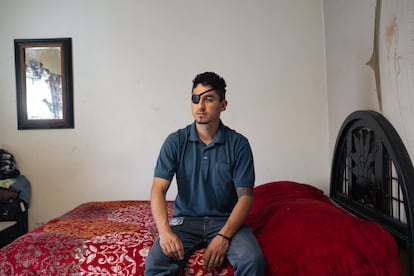
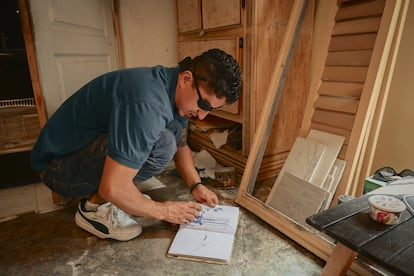
Mendoza Rodríguez is now 32-years-old. He has a daughter, a stable job at Walmart in Chihuahua, and a good relationship with the prosecutor who wanted to apply the full force of the law against him when he was still a teenager.
At the age of 16, he had killed 11 people, was part of a carjacking gang and was facing his first trial. He spent seven years in prison — the time divided between a juvenile center and an adult prison — until 2017, when he benefited from the National Law of the Comprehensive Criminal Justice System for Adolescents, which prevented minors from being held for more than five years.
During his time as a prisoner, Mendoza Rodríguez lost a kidney, an eye and mobility in one leg. These were the results of the violence in the penitentiary and the juvenile center. “At first, I thought I was a bad person, but we couldn’t all be bad. In my community, there were many children like me,” he sighs.
Latin America is the region in the world with the second-highest number of children in detention, only after North America (because of the United States). At least 34,000 boys and girls were detained across Latin America in 2024, or one in eight of those incarcerated worldwide.
The vast majority of these children are accused of minor offenses, such as robbery and theft, according to a UNICEF report published in early-June. Kendra Gregson — a child protection advisor for the organization in Latin America and the Caribbean — warns of the correlation between detentions and the subsequent deterioration in the mental and physical health of these young people. “Children miss important developmental milestones and are therefore at a disadvantage when it comes to grasping long-term opportunities for education and decent work,” the official explains. She suggests several alternatives to detention, which are closer to restorative justice than to heavy-handed measures, such as reparations, apologizing to victims, community service, or probation.
Like her, three other experts consulted by EL PAÍS agree that prison isn’t a place for children and that — far from preventing further violence — it ends up perpetuating it. Corina Giacomello — a professor and researcher at the Legal Research Institute at the Autonomous University of Chiapas — celebrates the Mexican legislation because, she affirms, it represents a giant step forward in a country accustomed to drug traffickers exploiting children.
“In Mexico, even though the narrative on the matter isn’t super progressive, we’ve managed to see these children as victims of organized crime, not as perpetrators,” she notes. However, both Giacomello and Mendoza Rodríguez detail countless shortcomings and deficiencies in Mexican juvenile centers. “Even if they receive a specialized regime, we have to rethink whether [incarcerated children] truly respond to the system’s principles of reintegration and support.”
“I did what I saw”
Irvin doesn’t excuse what he did. He now understands all the damage he caused. He understood this better when his pregnant partner died in an accident while he was in prison. “When I went through the grieving process, I understood the damage I had done — and the damage that other children continue to do — because of the mafias,” he reflects.
“I did what I saw my uncles and cousins doing; they were all the coolest because they stole and killed. They were well-known in the community,” he recalls. Since changing his life, he explains, he has periodically returned to his old neighborhood, to show the kids the other side of being “the coolest.”
“I tell them that, yes, they could get easy money, women and respect… but they would end up like me. Or worse: dead. I explain that none of them are El Chapo Guzmán.”
Salvadoran psychologist Jeannette Aguilar laments that cases like Irvin’s are so common in the region. She emphasizes that the punitive discourse cannot be solely focused on one person. “It’s important to recognize that this isn’t about black and white or good and bad. There’s clear individual and state responsibility. The state is the one that fails the victims by not protecting them, and it fails children like Irvin by not providing an alternative to the vulnerability and stigmatization of communities like his. This exclusion forces them to join criminal gangs,” she says by phone. “These children are also victims of violence.”
El Salvador is one of the countries in the region that has most intensified the persecution and detention of people, including minors. In the three-year-long state of emergency, the Salvadoran authorities have imprisoned more than 84,000 people, 70% of them between 12 and 35-years-old. And at least 3,300 have been minors. The latest amendments to the criminal law allow minors aged 12 and over to be tried as adults and sentenced to prison — alongside those over the age of 18 — for gang-related offenses. “This is a country that incarcerates its children and youth,” Aguilar criticizes.
A month ago, given the growing perception of insecurity in Peru, popular outcry led to the passage of a law that lowered the age of criminal responsibility for major crimes, bringing it down from 18 to 16. This means that any adolescent over 16 will be treated as an adult in certain cases, such as contract killings.
For Beatriz Ramírez Huaroto, a Peruvian lawyer, “the current prison regime gives the state the opportunity to work with them. Since they’re still adolescents and their patterns or behaviors aren’t yet established, these can be changed,” she points out. “We must ask ourselves if punishment alone is the solution to violence.”
Peruvian law stipulates that detained juveniles must be kept in wards that are separate from adult detention. This is also the case regarding legislation that governs other prisons in the region, such as those in El Salvador. However, the overcrowding of these prisons means that such clauses aren’t actually enforced.
Gregson, the child protection advisor at UNICEF, insists that “there’s no correlation between lowering the age [of criminal responsibility] and the decline in homicide rates.” Therefore, she explains, not only is it an ineffective measure, but it also risks increasing the number of children detained in contact with adults, who are often criminals.
Across Latin America, UNICEF estimates indicate that the number of minors deprived of their liberty has decreased in recent years, falling from 46,000 in 2018 to 34,000 in 2024, making it one of the regions reporting the largest decline.
Aguilar delves into how adolescence is a key stage of life, one in which personality and identity are established. “It’s a moment of self-construction; they’re reaffirming the space they occupy in the world. The stigmatization of their communities or neighborhoods freezes this process and constructs a negative identity and self-image,” she says. If, during this formative process, the role models aren’t teachers, parents, or school friends, but rather criminals, she explains that these children end up accepting that they belong to dangerous groups.
“In El Salvador, gangs thrive on incarcerated adolescents and young people, who are often jailed for minor offenses. They’re recruited right there in prison. Sometimes, it’s a path of no return,” she concludes.
Irvin’s case is the exception to the rule. As he tells EL PAÍS in a video call, if he managed to radically change his life, it was despite prison — not because of it. “Of those who were [jailed] with me, practically 97% are still in prison or dead,” he concludes.
And he laments that, during his reintegration process, he also experienced the absence of the state. “No psychologist or psychiatrist wanted to see me. I frightened them,” he explains. Subsequently, he began to control his anger, so as to avoid being violent toward others. He did this the best way he knew how: first by killing animals, then by self-harming.
For months now, Irvin has been in therapy. His only wish is to be able to be a responsible father one day.
Sign up for our weekly newsletter to get more English-language news coverage from EL PAÍS USA Edition