Pope says priests can bless same-sex unions, requests should not be subject to moral analysis
Francis reaffirms that marriage is a lifelong sacrament between a man and a woman, but says requests for such blessings should not be denied
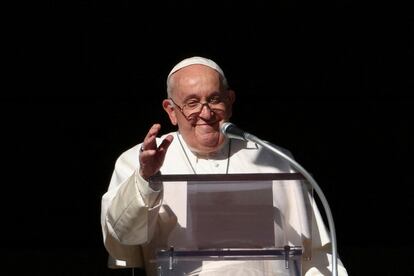
Pope Francis has formally approved allowing priests to bless same-sex couples, with a new document explaining a radical change in Vatican policy by insisting that people seeking God’s love and mercy shouldn’t be subject to “an exhaustive moral analysis” to receive it.
The document from the Vatican’s doctrine office, released Monday, elaborates on a letter Francis sent to two conservative cardinals that was published in October. In that preliminary response, Francis suggested such blessings could be offered under some circumstances if they didn’t confuse the ritual with the sacrament of marriage.
The new document repeats that rationale and elaborates on it, reaffirming that marriage is a lifelong sacrament between a man and a woman. And it stresses that blessings should not be conferred at the same time as a civil union or even with the clothing and gestures that belong in a wedding.
But it says requests for such blessings should not be denied full stop. It offers an extensive definition of the term “blessing” in Scripture to insist that people seeking a transcendent relationship with God and looking for his love and mercy should not be subject to “an exhaustive moral analysis” as a precondition for receiving it.
“Ultimately, a blessing offers people a means to increase their trust in God,” the document said. “The request for a blessing, thus, expresses and nurtures openness to the transcendence, mercy, and closeness to God in a thousand concrete circumstances of life, which is no small thing in the world in which we live.”
He added: “It is a seed of the Holy Spirit that must be nurtured, not hindered.”
Sign up for our weekly newsletter to get more English-language news coverage from EL PAÍS USA Edition

Tu suscripción se está usando en otro dispositivo
¿Quieres añadir otro usuario a tu suscripción?
Si continúas leyendo en este dispositivo, no se podrá leer en el otro.
FlechaTu suscripción se está usando en otro dispositivo y solo puedes acceder a EL PAÍS desde un dispositivo a la vez.
Si quieres compartir tu cuenta, cambia tu suscripción a la modalidad Premium, así podrás añadir otro usuario. Cada uno accederá con su propia cuenta de email, lo que os permitirá personalizar vuestra experiencia en EL PAÍS.
¿Tienes una suscripción de empresa? Accede aquí para contratar más cuentas.
En el caso de no saber quién está usando tu cuenta, te recomendamos cambiar tu contraseña aquí.
Si decides continuar compartiendo tu cuenta, este mensaje se mostrará en tu dispositivo y en el de la otra persona que está usando tu cuenta de forma indefinida, afectando a tu experiencia de lectura. Puedes consultar aquí los términos y condiciones de la suscripción digital.
More information

Últimas noticias
All the effects of gentrification in one corner of Mexico’s Colonia Roma

Palestinian reporter Youmna El Sayed: ‘My family told me I had to choose between being a journalist or a mother’
The new language of the workplace: Knowing how to ask AI questions is more important than using it
Russell Tovey: ‘I was advised many times not to come out, I don’t think there was many people who’d done that — and I feel really proud that I’m one of those that did’
Most viewed
- The low-cost creative revolution: How technology is making art accessible to everyone
- Families demand repatriation of bodies of Colombians who died in Ukraine: ‘This war is a slaughterhouse for foreigners’


- Christian Louboutin: ‘Young people don’t want to be like their parents. And if their parents wear sneakers, they’re going to look for something else’
- US sanctions against jailed cartel leader ‘El Marro’ highlight Mexico’s lack of control over its prisons
- Liset Menéndez de la Prida, neuroscientist: ‘It’s not normal to constantly seek pleasure; it’s important to be bored, to be calm’



































