
At last, somewhere to sit in Madrid’s Puerta del Sol
Anti-homeless railings installed by Popular Party around fountain removed by council
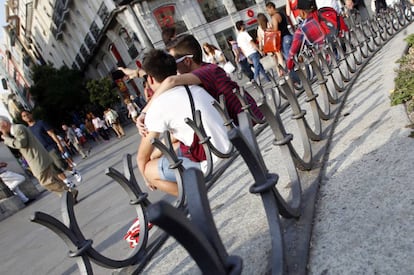
In a move that will allow tourists and locals to take the weight off their feet while watching the world go by in the capital’s landmark Puerta del Sol, Madrid City Hall has removed a low-level wrought iron railing installed round a fountain there in the mid-nineties.
According to Ahora Madrid City Hall councilor Jorge Garcia, the railing was removed at the request of residents, as well as Madrid’s School of Architects (COAM).
Eliminamos los pinchos que rodean la fuente de la Puerta del Sol para que las personas puedan sentarse. pic.twitter.com/ScyESALBK8
— Distrito Centro (@JMDCentro) April 14, 2016
“We’re getting rid of the spikes around the fountain in the Puerta del Sol so people can sit there”
“It didn’t make much sense to keep the spikes”, said Garcia, adding: “So many tourists and locals in the Puerta del Sol already have to sit on the ground”.
The railing was installed in 1995 by the Popular Party administration of the time in a bid to dissuade homeless people from hanging out in the square.
But with progressive former judge Manuela Carmena in the driving seat, this policy is being reversed and the fountain returned to what Madrid’s mayor describes as its “original purpose”.
Built in 1860 as a provisional feature, the fountain has traditionally provided the only place to sit in the Puerta del Sol. The COAM experimented with benches in the plaza very briefly in 2014, but their permanent introduction has since been ruled out.
Y esos pequeños detalles que hacen de Madrid una ciudad más acogedora y más amable para sus habitantes... https://t.co/6PD7m8RIBc
— Manuela Carmena (@ManuelaCarmena) April 14, 2016
“It’s details like this that make Madrid a more people friendly place for those who live here…”
Also under consideration is the removal of the fencing around the Daoíz and Velarde statue in the capital’s Plaza Dos de Mayo.
Her views were shared by senior councilor Mauricio Valiente, who described the gesture as “a token of the kind of openness and friendliness” that our local government “wants to see in the capital.”
“Symbolically, it says a lot about our aim to open up public spaces and make them more accessible,” he added. “It brings us closer to the kind of city we all dream of.”
English version by Heather Galloway.









































