The draw of Degas
Impressionist's intimate illustrations go on show at the Fundación Canal in Madrid

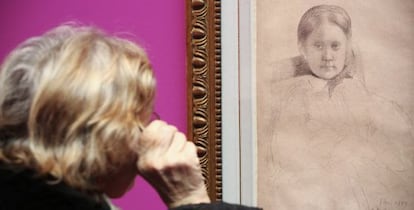
Drawing is a basic area of learning for many artists, allowing them to acquire the technique they will later develop in more highly considered media. Once mastered, many go on using it for tests and sketches, but also for giving form to their most intimate and dear works; those that have nothing to do with commissions or the market.
Edgar Degas (1834-1917), one of the leading figures of the Impressionist movement, considered drawing to be the basic foundation of his art, using it both in his deep studies of the great masters, as well as to portray his family and friends and outline the works that he would later create on canvas.
The collection of Robert Flynn Johnson, curator emeritus of the Fine Arts Museums of San Francisco, totals more than a hundred works by the French artist that are now on show at Madrid's Fundación Canal after touring the world.
The show contains a number of the artist's early works, many of them on public display for the first time
Johnson is also the curator of the exhibition, which explores Degas' working methods and personality. What, though, brought him to invest so much of his time - almost 40 years - and savings collecting the French artist's works on paper? "He is the artist who is most interested in people's spirit," he explains. "Unlike other Impressionists, who were more devoted to landscapes and still-lifes, Degas was inspired by people. All of his drawings reveal his personality. As occurred with many others, the drawings are almost never finished. They capture the emotion or the inspiration of the moment. What also interests me about him is his curiosity about everything: painting, sculpture, etching, photography." Degas, Johnson adds, is also the sharpest observer of human nature since Rembrandt.
Titled Edgar Degas. Impresionistas en privado (Edgar Degas. Impressionists in private), the show contains a number of the artist's early works, many of them on public display for the first time. They include drawings of his family and friends, self-portraits and detailed copies of works by the great masters hanging in the Louvre. After those come the pieces in which he tackles the same topics as his paintings.
Above all Degas was an experimenter, and the exhibition also features etchings, an odd collection of photos and his monotypes. As a counterpoint, there are also works by artists who were in some way related to the French genius, including Cézanne, Manet, Ingres, Fantin-Latour and Toulouse-Lautrec.
Edgar Degas. Impresionistas en privado. Until May 4 at Fundación Canal, C/ Mateo Inurria 2, Madrid. www.fundacioncanal.com