
Drop in government schoolbook subsidies sees parents scramble for shared solutions
Central budget for grants slashed by 80 percent in just two years

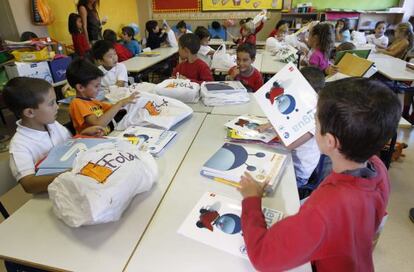
Between 2008 and 2012, average household spending plummeted — but not on items like education. Last year, 578,549 fewer people benefited from government subsidies to help pay for school books, a major expense for families in a country with no tradition in second-hand book exchanges.
Education Ministry sources admitted that it is “shocking” for so many people to be left without financial assistance, at least the part of it that is funded by the central government. In two years, the ministry’s budget for school book grants went down 80 percent, to 20 million euros in 2013 compared with 98.19 million in 2011. In the academic year 2009/2010, up to a million schoolchildren had some financial aid for book purchases.
The ability of regional authorities to compensate for the central government’s cutbacks is extremely limited considering that their own education budgets have been slashed.
Until recently, many regions offered school books for free, or nearly, regardless of families’ economic situation. But in Madrid, for instance, subsidies have been replaced with loans.
Jesús María Sánchez, president of the Ceapa parent association, complains about the great social problem that is being created by this drop in aid. “Years ago already, we suggested a system based on school book recycling and lending, which would have meant a higher initial expenditure for the government, but then would have meant a lot less spending,” he says.
Sánchez says parents have started initiatives to organize used book sales and book sharing schemes. “We are trying to make up for what we don’t get from the government with solidarity,” adds Luis Carbonel, president of the Catholic parent association Concapa.









































