
Mexican jaguar sanctuary welcomes ‘Yazu,’ a cub that will help develop a genetic bank
The project aims to rescue and care for these felines and return them to the wild, as well as to study their lineage and safeguard their DNA material
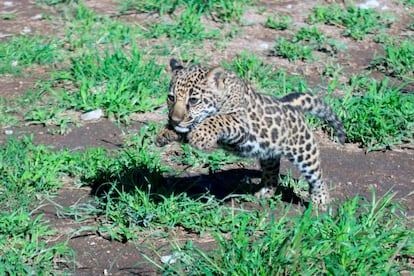
The roar of the female jaguar can be heard throughout the Yagul Jaguar Sanctuary conservation, preservation, and rescue center in Oaxaca, and even further afield, in the nearby town of Tlacolula de Matamoros, about 20 miles east of the state capital. It’s the sound of a mother trying to protect her one-month-old cub. Little Yazu is the first cub born under the center’s Mexican jaguar breeding and conservation program, which aims to preserve the species.
Although the numbers in Mexico are encouraging, jaguars continue to face threats such as habitat loss due to forest fires, climate change and poaching. According to the latest census conducted by the National Jaguar Conservation Alliance, 5,300 individuals have been counted in the corridor stretching from Sonora and Nuevo León to the Yucatán Peninsula in 2025. In 2008, when the first count was conducted, the number of pantheras onca (their scientific name) was estimated at 4,000. While this figure is encouraging, experts warn of the need to reinforce rescue programs for these cats, as well as the conservation of biological corridors in the territory.
For this reason, the Yagul Sanctuary decided to create the Jaguar Genetic Bank to preserve the Mexican panthera onca. According to Víctor Rosas Vigil, director of the Jaguars in the Jungle Foundation, conservationists have begun taking genetic samples to determine the lineage of the specimens at the sanctuary, which were rescued by the Federal Attorney’s Office for Environmental Protection (Profepa) and the National Commission of Natural Protected Areas (Conanp).
The project includes the analysis and preservation of genetic material from Mexican jaguars, as well as breeding programs to strengthen populations in priority areas for their recovery.
The sanctuary’s general director, José Eduardo Ponce Guevara, explains that, in addition to the gene bank, the center also focuses on rescue, rewilding, care for abused animals, support for communities in conservation and territorial defense strategies, and the development of compensation programs for megaprojects.
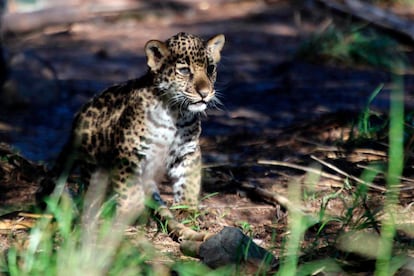
The jaguar breeding program that led to the birth of Yazu, he notes, was made possible through various studies conducted on Mexican specimens rescued by Mexican wildlife conservation authorities, including Balam—a male Panthera onca from San Miguel Chimalapas, Oaxaca—and a female recovered in Campeche. Both specimens had no chance of being returned to the wild. However, their cub already has a path outlined for it that leads to its reintroduction into the wild, as part of the establishment of a genetically viable population within the Wildlife Conservation Unit (UMA).
Flagship program
Over the course of 25 years, this center has veered in diametrically opposite directions. Initially, the Jaguar Xoo was a zoo with various animals kept for exhibition, but in 2014, a move to another location also implied a paradigm shift. Located in the Yagul Natural Monument Protected Area—where the oldest remains of domesticated plants dating back more than 10,000 years were found—the Jaguar Sanctuary embarked on a path toward conserving the country’s biological diversity.
One of the center’s flagship programs is “wilding,” which seeks to rescue and reintroduce into the wild felines rescued in their first months of life, after their mothers were killed by poachers or died in fires or other natural disasters. Currently, three pumas found in the state of Hidalgo in 2022 when they were barely three months old are in the process of developing all their natural skills and instincts in a “wildlife simulator” located within the same sanctuary, a hectare of land with no human contact and constantly monitored by cameras.
If they manage to meet the challenges of life in the wild—such as climbing, sniffing, marking territory, and, above all, hunting, as well as many other activities typical of their species—before the end of 2025, they will likely be released in Hidalgo, the Sierra Gorda in Querétaro, or in Guanajuato.
This program has already had a success story: two three-month-old female jaguars separated from their mother due to poaching in Calakmul, Campeche, in 2016. After three years of intense training in the “wildlife simulator,” they were reintroduced into the jungle in 2020. The cubs arrived at the sanctuary almost as newborns, with their health impaired by the lack of adequate care, and became pioneers of a program that is becoming a milestone in the Americas.
Second chance for Luna
Luna has a scar on her nose, the result of constant friction with the glass behind which she was displayed at a veterinary clinic located in a shopping plaza in the Oaxacan capital. The jaguar cub was rescued by Profepa (National Profepa) and transferred to the Yagul Jaguar Sanctuary after the case of abuse went viral on social media. Seven months into her recovery, she has a second chance. Her new home allows her to run and eat differently; her nose and eyes have healed; she’s overcome malnutrition; and she’s now an ambassador for environmental education.
The Jaguar Sanctuary, explains Sebastián Hernández Serafico, the center’s veterinarian, has a population of 50 animals of different species, including jaguars, ocelots, lions, tigers, crocodiles, spider monkeys, peccaries, and even a Burmese python, although the focus is on Mexican felines. These are, he explains, “animals that are illegally trafficked, or have been hit by a car, burned by a forest fire, or have been trapped by local residents after causing livestock casualties, resulting in them arriving in poor health: dehydrated, malnourished, with trauma, or multiple traumas.”
Once they arrive, they receive medical attention, food, and all kinds of care. The difference with a zoo is that these animals are not there to be exhibited, but rather to be given second chances. Specialists assess them, direct them to a suitable physical space, and, in optimal cases, send them to the wildlife simulator to be reintroduced into the wild. In this space, animals that have suffered abuse and cruelty regain their dignity and become ambassadors for conservation. The sanctuary receives around 20,000 visitors a year, who are taught about the human impact on nature.
Territorial conservation and megaprojects
Jaguars require vast expanses of jungle or forest to thrive in the wild. In some cases, they move from one state to another in search of food or a female to mate with. Panthera onca are a living example of ecosystem conservation. As the largest predator in the Americas, their existence impacts the biodiversity of the places they inhabit.
In Mexico, the Yucatán Peninsula has the largest number of jaguars, followed by the jungles and scrublands shared by Oaxaca and Chiapas. However, healthy populations of these felines have been documented in northern states such as Nuevo León and Tamaulipas, and in the Pacific, such as Sinaloa, Guerrero, and Michoacán. The Panthera onca is also an umbrella species, meaning its conservation positively impacts other smaller species that are part of the food chain of large predators.
To conserve this species, the Jaguars in the Jungle Foundation works alongside communities and agricultural organizations, state and federal environmental protection institutions, and businesses, which can contribute through environmental impact compensation measures or by purchasing “biodiversity credits,” a voluntary market that is beginning to emerge in Mexico. It is a combined effort to protect the largest feline in the Americas.
As the imposing jaguar Balam rests on a platform in the tranquility of the Yagul Sanctuary, the roar of the female caring for her newborn cub resonates as a hope for her lineage to regain its freedom.
Sign up for our weekly newsletter to get more English-language news coverage from EL PAÍS USA Edition









































